-
 Alone and On My Own
1.990 дин. × 1
Alone and On My Own
1.990 дин. × 1
Укупно : 1.990 дин.
 Alone and On My Own
1.990 дин. × 1
Alone and On My Own
1.990 дин. × 1 Укупно : 1.990 дин.
1.690 RSD
Orders at: @ivana_blecic_
Translation from Serbian: Tatjana Ćosović
Illustrations: Milica Savić
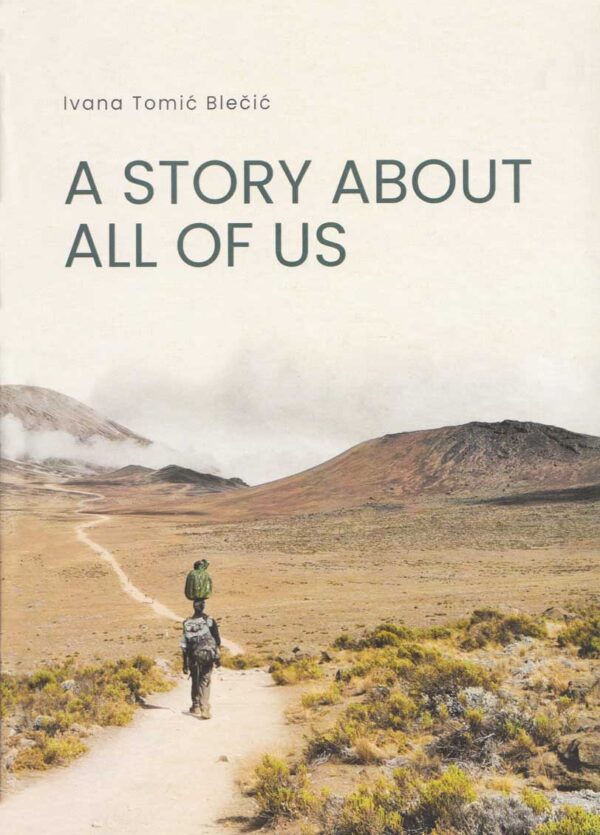
From her debut book Alone and On My Own to the poetic-prose work Journey Through Love and the travelogue A Story About All of Us, Ivana Tomić Blečić leaves an interesting and somewhat intriguing authorial mark.
Whether writing down poetry, meditative musings, or travel diaries, Ivana Tomić Blečić follows the path of her own growth in the face of challenges that life throws at her. Her work often touches on popular psychology, which she professionally engages with, but this layer is just a facet of the reflection of the world and times in which the author lives. What shapes Ivana Tomić Blečić’s literary expression is primarily emotional, and then stylistic, semantic, and authentically sociological. Since her first book, the author has sought the wholeness of man and the world around her.
The author and her team embark on the Kilimanjaro journey as mature, accomplished, successful individuals, each following their personal motivation. But, as she guides us through the world of ‘another reality’ and as we draw ever closer to the summit, step by step, Ivana Tomić Blečić’s literary being is actually descending deeper into her own soul, so much so that upon reaching the peak, she sings none other than Midnight (the icon song from the film Toma). Our soul is eternally an unlit territory, isn’t it? In seeking the answers to our doubts, we search for light and we ascend in spirit. The fantastic antithesis in this travelogue is the descent into the soul and ascent up the mountain at the same time. Hence, after ‘conquering’ the summit, the author says: ‘Uhuru means freedom. Uhuru is the name of the highest peak in Africa. We have conquered freedom, at least for a moment’.” (From the Afterword by Gordana Jež Lazić)